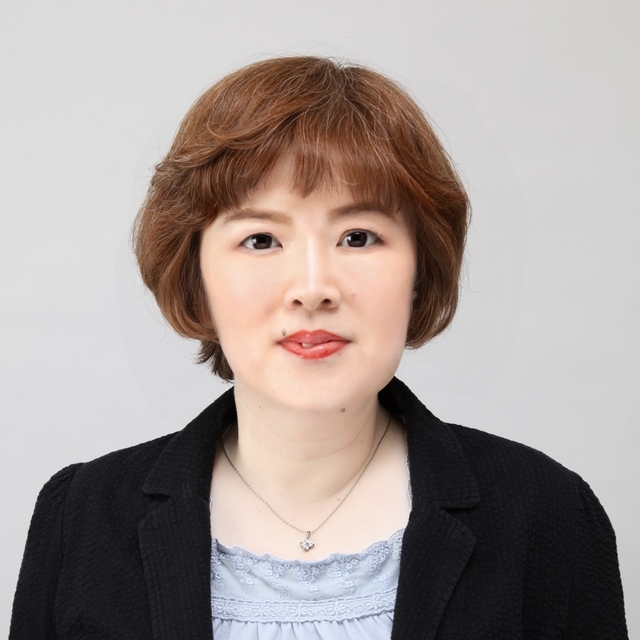
20 Years of Litigation Experience | Licensed in Japan & California | Fellow of IAFL | Member of BHBA (Family Law & Trusts & Estates Sections)

Cross-Border Estate & Family Law Japan
Legal Profession Corporation CastGlobalToikyo Office 34F Atago Green Hills MORI Tower2-5-1 Atago, Minato-ku,
Tokyo、105-6234, Japan
Office Hours
9:30~17:30
on weekdays
050-3649-6002
Cross-Border Legal Insights
Divorce When Your Spouse Has Assets in Japan: Jurisdiction, Your Options, and What to Do

Introduction
In practice, many individuals encounter serious difficulties not at the stage of divorce itself, but when dealing with assets located in Japan. For example, it may not be possible to access a Japanese bank account or even identify the location or ownership of real estate.
These issues often arise because legal systems differ significantly across jurisdictions, particularly in terms of jurisdiction, property division, evidence gathering, and enforcement. In cross-border divorce cases involving Japan, these differences can cause delays and complications. This article explains how these issues arise and how they can be approached in practice.
1. Jurisdiction in International Divorce Cases
One of the first and most important questions in an international divorce is which country’s court has jurisdiction.
In Japan, international jurisdiction in family matters is governed by Article 3-2 of the Personal Status Litigation Act and Article 3-11 of the Domestic Relations Case Procedure Act.
In practice, more than one country may have jurisdiction at the same time. For example, one spouse may live abroad while maintaining connections to Japan, including assets or other ties.
This is not merely a procedural issue. Different jurisdictions apply different rules regarding:
- property division
- spousal support
- recognition of foreign judgments
As a result, the choice of jurisdiction can significantly affect the financial outcome of a divorce.
In practice, determining jurisdiction depends on multiple factors, including residence, nationality, and the location of assets.
2. Japanese Assets in Divorce Proceedings
When one spouse holds assets in Japan, those assets often become central to divorce negotiations or litigation.
Typical examples include:
- real estate (residential or investment)
- bank accounts in Japanese financial institutions
- shares or business interests in Japanese companies
However, in practice, even identifying these assets can be difficult.
A key issue is that Japan does not have a broad pre-trial discovery system, unlike jurisdictions such as California.
As a result, if one party does not voluntarily disclose assets, it may be difficult to determine:
- which bank holds the account
- where real estate is located
This limitation directly affects the ability to identify the scope of marital property.
If the relevant assets cannot be properly identified, it may become difficult to achieve a fair division of property in practice.
3. Property Division Under Japanese Law
Under Japanese law, property division in divorce is based on the principle that property acquired during marriage through the cooperation of both spouses should be fairly distributed.
In practice, Japanese courts often divide marital property relatively equally, although the exact outcome depends on the circumstances.
However, the following are generally excluded:
- assets acquired before marriage
- assets obtained through inheritance or gifts
In practice, disputes frequently arise over whether a particular asset qualifies as marital property. This classification can significantly influence the final outcome.
4. Cross-Border Enforcement Issues
Even if a divorce judgment is obtained in one country, it does not automatically take effect in another.
In practice, when assets are located in Japan, it is necessary to consider whether a foreign judgment can be recognized and enforced in Japan.
Additional procedures in Japan may be required.
Similarly, even if the parties reach a settlement, further steps may be needed in Japan to:
- transfer ownership of real estate
- access or transfer funds in Japanese bank accounts
In practice, without completing these procedures, the agreed division of property may not be realized.
5. Practical Considerations in Cross-Border Divorce
Cross-border divorce cases involving Japanese assets often involve multiple practical challenges.
Typical issues include:
- identifying and valuing assets in Japan
- coordinating proceedings across jurisdictions
- addressing differences in legal systems
- handling language and documentation issues
A particularly important issue is the limitation in obtaining financial information.
In practice, Japanese courts may, upon request, issue an inquiry (so-called chōsa shokutaku) to financial institutions during divorce proceedings. If approved, the court may request information from a specified institution, and responses are often provided.
However, this procedure generally requires that the relevant financial institution be identified in advance.
As a result, if it is unclear which bank holds the assets, this mechanism may be difficult to use effectively.
In addition, recent legal reforms in Japan (effective from 2025) have introduced mechanisms aimed at improving asset disclosure in family law matters.
These reforms are intended to enhance transparency and may create incentives for disclosure in certain situations.
However, in practice, their effectiveness will depend on how they are applied in individual cases.
Given these limitations, early-stage information gathering and case strategy are often critical in practice.
Conclusion
Divorce cases involving assets in Japan present complex legal and practical challenges, including jurisdiction, property division, and enforcement.
In practice, outcomes can vary significantly depending on what information can be identified and how procedures are structured.
Understanding both the legal framework and its practical limitations is an important first step toward resolving these issues.
Understanding these limitations is often essential before deciding how to proceed in practice.
If you are facing uncertainty about assets in Japan in a cross-border divorce, understanding what information can realistically be obtained—and what cannot—can make a significant difference. Seeking guidance at an early stage may help clarify available options and avoid unnecessary delays.
Contact information

Please contact via e-mail.
050-3649-6002
Office hours 9:30~17:30 on weekdays
Contact us

Strategies for
International Divorce
More information
Representation in
Hague Convention
Cases
More information
Contact information
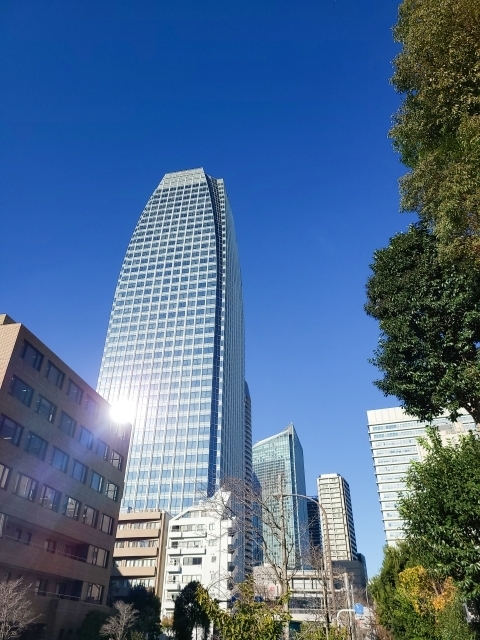
34F Atago Green Hills MORI Tower 2-5-1 Atago, Minato-ku, Tokyo 105-6234, Japan
電話: Tel 81+(0)50-3649-6002