20 Years of Litigation Experience | Licensed in Japan & California | Fellow of IAFL | Member of BHBA (Family Law & Trusts & Estates Sections)

Cross-Border Estate & Family Law Japan
Legal Profession Corporation CastGlobalToikyo Office 34F Atago Green Hills MORI Tower2-5-1 Atago, Minato-ku,
Tokyo、105-6234, Japan
Office Hours
9:30~17:30
on weekdays
050-3649-6002
How Foreign Lawyers Can Coordinate Japanese Inheritance Procedures

Introduction
Cross-border estates involving Japan are no longer exceptional—they are a regular feature of high-net-worth families whose lives, assets, and relationships span multiple jurisdictions. For foreign lawyers, particularly those advising clients with Japanese nationality, assets in Japan, or heirs residing in Japan, understanding how to coordinate Japanese inheritance procedures is not simply beneficial—it is indispensable.
Unlike common law jurisdictions that rely on centralized probate systems, Japan operates a fundamentally different framework. Japanese inheritance procedures are largely document-driven and administered through financial institutions, legal affairs bureaus, and other authorities rather than a single supervising court. This structural distinction often creates practical uncertainty for foreign practitioners.
At the same time, this system allows for efficient administration when handled correctly. The key lies in early coordination with Japanese professionals and a clear understanding of the procedural architecture under Japanese law. This article provides a structured, solution-oriented overview designed to assist foreign lawyers in navigating Japanese inheritance procedures with confidence and precision.
1. Determining the Governing Law of Succession
The threshold issue in any cross-border inheritance matter is identifying the governing law. Under the Act on General Rules for Application of Laws, the law governing succession is determined by the national law of the deceased.
Japanese law applies when the deceased was a Japanese national at the time of death.
Even where Japanese heirs reside outside Japan, the determination of legal heirs and statutory shares may still be governed by the Japanese Civil Code. Therefore, foreign lawyers must carefully assess:
- Nationality of the deceased
- Habitual residence and domicile history
- Location and nature of assets
- Existence and validity of a will
This initial analysis is critical. It not only determines the applicable substantive law but also defines the procedural path that must be followed in Japan. Early misclassification at this stage often leads to significant delays or inconsistencies in later procedures.
If the deceased was a foreign national, the law of that foreign country will govern the succession. Accordingly, the scope of heirs and their statutory shares shall be determined in accordance with that foreign law.
2. Identifying Legal Heirs Through Koseki (Family Registry)
A defining feature of Japanese inheritance practice is its reliance on the family registry system (koseki). Unlike many jurisdictions that depend on affidavits or court determinations, Japan requires official registry documentation to establish heirship conclusively.
To complete inheritance procedures, a full set of koseki records—covering the deceased from birth to death—is typically required. These documents serve to:
- Establish familial relationships
- Identify all statutory heirs
- Confirm succession rights
For foreign lawyers, obtaining and interpreting these records can be challenging. Coordination with Japanese counsel is therefore essential to ensure that no heir is overlooked and that the statutory inheritance shares are accurately determined.
3. Verifying the Existence and Validity of a Will
The existence of a will significantly affects the structure of the inheritance process. Under Japanese law, wills may take several legally recognized forms, including:
- Notarized wills (koseishousho igon)
- Holographic wills (jihitushousho igon)
Each form carries distinct requirements for validity and execution.
Foreign lawyers must evaluate:
- Whether the will is valid under Japanese law
- Whether it governs the entire estate or only specific assets
- Whether forced heirship (legally reserved portions) applies
Even a valid will does not necessarily eliminate the rights of certain heirs. Japan’s system of statutory reserved portions (iryubun) may affect the ultimate distribution, requiring careful legal analysis and, in some cases, negotiation among heirs.
4. Preparing Documentation for Overseas Heirs
Where heirs reside outside Japan, procedural complexity increases significantly. Japanese institutions typically require formal documentation to verify identity, intent, and authority.
Common requirements include:
- Notarized signatures or affidavits
- Copies of passports
- Proof of address
- Certificates of signature (or equivalent)
In addition, these documents generally require:
- Japanese translations
- Notarization in the relevant jurisdiction
- Apostille or consular authentication(may be required in certain cases)
Improperly prepared documentation is one of the most common causes of delay. Foreign lawyers play a crucial role in ensuring that documents meet Japanese procedural standards before submission.
5. Coordinating the Estate Division Agreement
In the absence of a comprehensive will, heirs must execute an estate division agreement (isanbunkatsu kyogisho). This document is central to Japanese inheritance practice and must be agreed upon by all heirs.
From a practical perspective, foreign lawyers should:
- Explain the legal implications of the agreement to their clients
- Coordinate execution across multiple jurisdictions
- Ensure compliance with Japanese formal requirements
Because unanimity is required, even minor misunderstandings can delay the entire process. Careful coordination and clear communication among all parties—including Japanese counsel—are essential.
6. Conciliation and Adjudication of Estate Division
If the estate division cannot be resolved through agreement among the heirs, the heirs must file a petition for conciliation of estate division with the Family Court.
If the matter cannot be resolved through conciliation, the procedure will proceed to adjudication, in which the court will render a binding decision on the division of the estate.
Only attorneys qualified in Japan are permitted to represent heirs in conciliation and adjudication proceedings. Therefore, it is advisable for foreign counsel to coordinate closely with Japanese attorneys.
7. Completing Asset-Specific Transfer Procedures
A critical distinction in Japan is that inheritance does not automatically transfer ownership through a unified court process. Instead, each asset must be transferred individually through the relevant authority.
Examples include:
- Real estate: registration at the Legal Affairs Bureau
- Bank accounts: procedures with financial institutions
- Securities: transfer through brokerage institutions
Each asset class has its own documentation requirements and procedural rules. Foreign lawyers should therefore work closely with Japanese professionals to ensure that all submissions are accurate and complete.
However, where the estate division is resolved through conciliation, the transfer of assets may be effected based on the record of conciliation; and where it is resolved through adjudication, the transfer may be effected based on the adjudication order together with a certificate of finality.
Conclusion
Japanese inheritance procedures require a high degree of procedural accuracy and cross-border coordination. For foreign lawyers, the challenge lies not only in understanding Japanese law but also in navigating a system that is fundamentally document-driven and decentralized.
However, with proper planning and collaboration, this system can be managed efficiently. By:
- Accurately determining governing law
- Properly identifying heirs through koseki
- Carefully reviewing wills
- Preparing compliant documentation for overseas heirs
- Coordinating estate division agreements
- Coordination with qualified Japanese counsel acting as legal representative in estate division conciliation and adjudication proceedings
- Managing asset-specific transfers
Foreign lawyers can provide substantial value to their clients and ensure smooth administration of Japanese estates.
For high-net-worth clients in particular, early engagement with experienced Japanese counsel is often the decisive factor in avoiding delays, minimizing disputes, and achieving a legally sound and efficient outcome.
Contact information

Please contact via e-mail.
050-3649-6002
Office hours 9:30~17:30 on weekdays
Contact us

Strategies for
International Divorce
More information
Representation in
Hague Convention
Cases
More information
Contact information
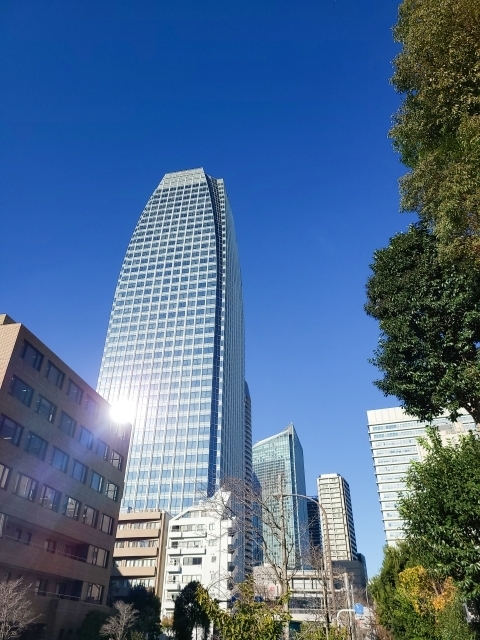
34F Atago Green Hills MORI Tower 2-5-1 Atago, Minato-ku, Tokyo 105-6234, Japan
電話: Tel 81+(0)50-3649-6002