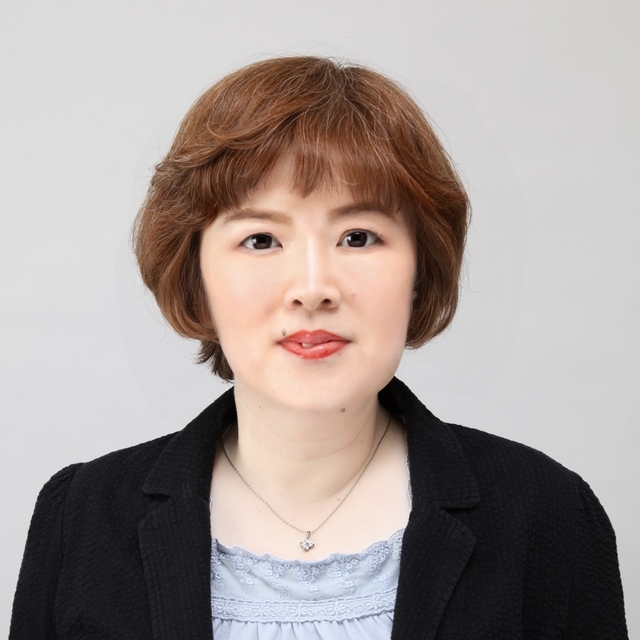
20 Years of Litigation Experience | Licensed in Japan & California | Fellow of IAFL | Member of BHBA (Family Law & Trusts & Estates Sections)

Cross-Border Estate & Family Law Japan
Legal Profession Corporation CastGlobalToikyo Office 34F Atago Green Hills MORI Tower2-5-1 Atago, Minato-ku,
Tokyo、105-6234, Japan
Office Hours
9:30~17:30
on weekdays
050-3649-6002
Navigating Japan–California Inheritance: Why U.S. Probate Documents Often Fail at Japanese Banks?
Introduction
In practice, inheritance procedures for Japanese bank accounts are frequently observed to stall for several months due to structural disparities between the Japanese and U.S. legal systems.
One of the primary causes is the discrepancy in the nature of required evidentiary documentation. While California relies on court-supervised probate proceedings, Japanese financial institutions place extreme importance on the presentation of a Family Registry (Koseki) to certify hereditary relationships.
This column outlines practical considerations in Japan–California estate succession and offers insights on avoiding procedural deadlocks. We hope this analysis serves as a helpful guide in resolving your international legal challenges.
1. Conflicts of Governing Law: Nationality vs. Domicile
The first point of consideration is determining which law governs the inheritance. Under Japan’s Act on General Rules for Law Applicable to Particular Cases, inheritance is, in principle, governed by the national law (nationality) of the deceased. In contrast,
California law generally applies the law of the decedent’s domicile, particularly regarding probate matters for personal property.
In practice, this discrepancy can cause Japanese and U.S. legal rules to overlap for the same estate, creating uncertainty in asset distribution.
For example, if a Japanese national domiciled in California passes away, a "mixture of rules" arises: Japanese financial institutions may operate on the assumption of compliance with the Japanese Civil Code, while California law governs the U.S.-based assets.
When to Consult: To clarify which jurisdiction’s rules take precedence and to prevent future inconsistencies in legal claims, we recommend consulting a specialist during the early stages of procedures in Japan.
2. Divergent Property Systems: Community Property vs. Statutory Shares
Japan and California utilize different systems for determining asset distribution among heirs.
California observes community property rules for married couples, where assets acquired during marriage are, in principle, owned equally.
Conversely, Japanese inheritance law defines statutory inheritance shares for spouses and children, with certain heirs protected by reserved portion rights (Iryu-bun).
In practice, these contrasting rules can lead to unexpected differences in interpretation among heirs.
If a Japanese spouse passes away, a surviving spouse residing in California may assume they naturally hold a 50% interest in a Japanese bank account. However, if the account is in the decedent’s sole name, Japanese practice often treats the entire balance as part of the estate subject to statutory inheritance shares.
When to Consult: It is considered an appropriate time to seek advice when it is discovered that a bank account in Japan is held in the sole name of one spouse in a Japan–California inheritance context.
3. Procedural Nature: Probate vs. Document-Based Succession
In California, probate is conducted under court supervision, and a personal representative is appointed. In Japan, there is no single court-led probate process covering the entire estate; instead, it is customary to proceed individually by submitting documents directly to each financial institution or government office.
In practice, even if California law is determined to be the governing law, court documents such as an "Order for Distribution" are frequently not accepted immediately by Japanese institutions. It often becomes necessary to explain the applicable California law. Furthermore, while the identification of heirs is essential, Japanese institutions may judge that U.S. documents lack the comprehensive evidentiary power of a Japanese Koseki. Heirs who cannot obtain a Koseki due to overseas residency may find it challenging to construct alternative evidentiary information.
When to Consult: If U.S. probate documents alone are insufficient to move Japanese procedures forward, it is time to consider specific measures to bridge the practical gap, such as the utilization of professional Affidavits.
4. Validity of Wills and "Probate" (Ken-nin) in Japan A will created in one jurisdiction may face challenges regarding its validity or method of execution in the other. Even for a will drafted under California law, its validity must be confirmed against Japanese law when used for procedures such as the transfer of real estate title (inheritance registration) in Japan.
In practice, it is important to note that even for a valid foreign will, a "Probate" (Ken-nin) procedure in the Japanese Family Court may be required.
Unlike the California probate process for estate administration, the Japanese Ken-nin is a simplified court procedure solely intended to verify and preserve the existence and physical condition of a will.
When executing a foreign will that is not in the form of a Japanese Notarial Will, Japanese registries or financial institutions may point out the lack of a court Ken-nin. Early determination of whether this procedure is necessary is key to a smooth succession.
5. Practical Hurdles for Overseas Heirs: Verification and Certification
Heirs residing outside of Japan face unique requirements for identity verification and signature certification. While financial institutions and government offices require notarized signatures and translated documents, heirs in Japan who do not have a Registered Seal (Jitsu-in) or Seal Certificate (Inkan Shomeisho) are often asked to provide a Signature Certificate instead.
For Japanese nationals, it is common to obtain a Signature Certificate at the local Japanese Embassy or Consulate. However, for foreign nationals or those living in remote areas, notarization by a local Notary Public—and in some cases, an Apostille—may be required. It is not uncommon for procedures to stall due to minor discrepancies in the wording of such documents.
When to Consult: If you are uncertain about the specific format of certification required in place of a Koseki or Inkan Shomeisho, seeking professional advice can mitigate the risk of having to redo documentation.
Conclusion
Inheritance cases involving Japan and California require specialized consideration due to differences in governing laws, property systems, and the nature of required documentation.
The coordination between specialists familiar with both legal systems is an extremely effective path toward smooth estate administration. To appropriately protect property rights in California while satisfying the stringent requirements of Japanese institutions, it is highly recommended to establish a clear outlook from an early stage.
Contact information

Please contact via e-mail.
050-3649-6002
Office hours 9:30~17:30 on weekdays
Contact us

Strategies for
International Divorce
More information
Representation in
Hague Convention
Cases
More information
Contact information
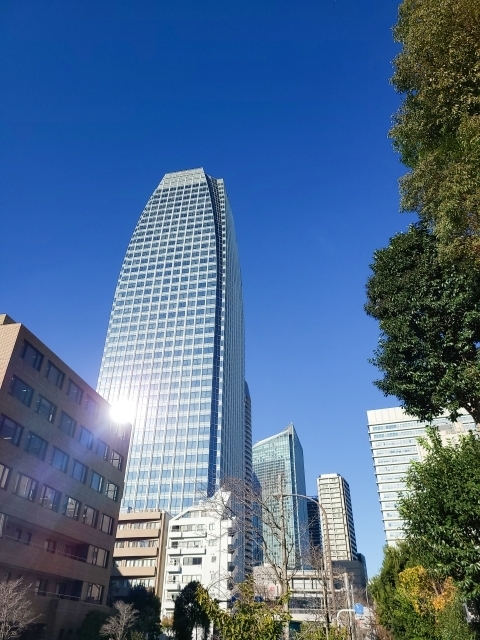
34F Atago Green Hills MORI Tower 2-5-1 Atago, Minato-ku, Tokyo 105-6234, Japan
電話: Tel 81+(0)50-3649-6002