20 Years of Litigation Experience | Licensed in Japan & California | Fellow of IAFL | Member of BHBA (Family Law & Trusts & Estates Sections)

Cross-Border Estate & Family Law Japan
Legal Profession Corporation CastGlobalToikyo Office 34F Atago Green Hills MORI Tower2-5-1 Atago, Minato-ku,
Tokyo、105-6234, Japan
Office Hours
9:30~17:30
on weekdays
050-3649-6002
Division of Marital Property Under Japanese Law International Divorce: A Practical Guide

Introduction
For international couples or foreign nationals residing in Japan, divorce involves not only emotional challenges but also complex financial restructuring. When Japanese law governs the dissolution of a marriage, the "Division of Marital Property" (Zaisan Bunyu) becomes the focal point of the settlement. Unlike some jurisdictions that follow strict community property rules or discretionary equitable distribution, Japan operates on a "Contribution-Based Liquidation" principle. Navigating this system requires a deep understanding of what constitutes marital versus separate property, how to value Japanese-based assets, and the practicalities of cross-border enforcement.
1. The 50/50 Rule and the Principle of Contribution
The fundamental starting point in Japanese family courts is the "Equal Division Rule." Regardless of which spouse earned the income or whose name appears on the bank account or real estate title, any asset acquired through the cooperative efforts of the spouses during the marriage is presumed to be shared equally.
Presumption of Equality: Even if one spouse was a stay-at-home parent while the other was a high-earning executive, the court generally views their contributions as equal, leading to a 50/50 split of the marital estate.
Exceptions to the Rule: In rare cases involving extraordinary professional skills or pre-existing wealth that significantly increased the estate beyond "normal" cooperation, a court might deviate from the 50/50 ratio, though this is difficult to prove without expert legal advocacy.
2. Distinguishing Marital Property from Separate Property
The most contested issue in international divorce is often the classification of "Separate Property" (Tokuyu Zaisan). Under the Japanese Civil Code, assets that are not subject to division include:
Pre-marital Assets: Property owned by either spouse prior to the marriage.
Gifts and Inheritances: Assets received by one spouse from third parties (e.g., parents) during the marriage.
The "Commingling" Trap: A significant challenge for HNW (High Net Worth) individuals is the commingling of separate and marital funds.
Consider a case where one spouse’s pre-marital funds (Separate Property) are applied toward the purchase of a family residence, but the property is subsequently registered solely in the other spouse’s name. The "Separate" status may be lost unless rigorous "tracing" of funds is provided through historical bank records.
3. Valuation of Complex Assets: Real Estate, Pensions, and Business Interests
Proper valuation is critical to ensuring a fair settlement, especially when assets are located in Japan.
Real Estate: Valuation is often based on the current market value at the time of the divorce (or the time of separation), rather than the purchase price. Disagreements often arise between "Appraisal Value" and "Tax Assessment Value."
Business Interests: For business owners, the valuation of non-listed company shares is highly complex. Japanese courts look at net assets and earnings, but the lack of a formal "Discovery" process makes it difficult to uncover the true value of a spouse’s business interest without voluntary disclosure or lawyer-led investigations.
Retirement Benefits (Pensions): Japanese law allows for the division of the "Kosei Nenkin" (employees' pension). However, private corporate pensions and voluntary severance pay are handled differently and must be negotiated as part of the overall property settlement.
4. The Absence of "Discovery" and the Role of Disclosure
Foreign lawyers and clients are often surprised to learn that Japan does not have a comprehensive "Discovery" process similar to that in the United States or the U.K.
Voluntary Disclosure: Parties are expected to disclose their assets voluntarily. If a spouse hides assets, the other party must take the initiative to find them.
Attorney Inquiry Power (Bengoshi Shokai): Japanese attorneys have the power to request information from banks and financial institutions. While helpful, this power has limitations, especially if the account details (bank name and branch) are unknown.
In divorce conciliation proceedings at the Family Court, a party may file a petition for a "Commission of Inquiry" (Chosa Shokutaku). Once the court grants this petition, it issues a formal inquiry to specific third-party institutions—such as banks or brokerage firms where the other party’s accounts are held. This process often reveals the extent of the other party’s assets. However, conducting such an inquiry is difficult if the specific financial institution (e.g., the exact bank name or branch) where the assets are located remains unknown.
5. Practical Enforcement and Cross-Border Challenges
Reaching an agreement is only half the battle; the actual transfer of assets is where many international divorces falter.
Domestic Enforcement: If a spouse refuses to pay the agreed amount, a "Direct Execution" against bank accounts or salary in Japan is possible if there is a court-certified Conciliation Record (Chotei Chosho) or Judgment.
International Enforcement and Cross-Border Challenges:
To enforce a Japanese divorce judgment against assets located in a foreign jurisdiction, such as California, a separate legal proceeding must be initiated within that jurisdiction. Conversely, to enforce a foreign judgment ordering monetary payment in Japan, it may be possible to obtain an "Execution Judgment" (Shikko Hanketsu), provided that the requirements for the recognition of foreign judgments (see Article 118 of the Code of Civil Procedure) are satisfied.
On the other hand, even if a foreign court issues an order regarding the division of real property located in Japan, such an order is not directly enforceable for title transfer. In such cases, a separate petition for the division of marital property must be filed with the Japanese court to effectuate the transfer of the Japanese real estate.
Conclusion
The division of marital property in Japan is a process governed by specific procedural nuances and a strong preference for 50/50 liquidation. For international clients, the risk of losing "Separate Property" through commingling or failing to properly value Japanese business interests is high. Success in these cases depends on the ability to bridge the gap between foreign legal expectations and Japanese judicial reality. Our team provides the specialized expertise needed to navigate these complexities, ensuring that your financial interests are protected and that the final settlement is both fair and enforceable.
Contact information

Please contact via e-mail.
050-3649-6002
Office hours 9:30~17:30 on weekdays
Contact us

Strategies for
International Divorce
More information
Representation in
Hague Convention
Cases
More information
Contact information
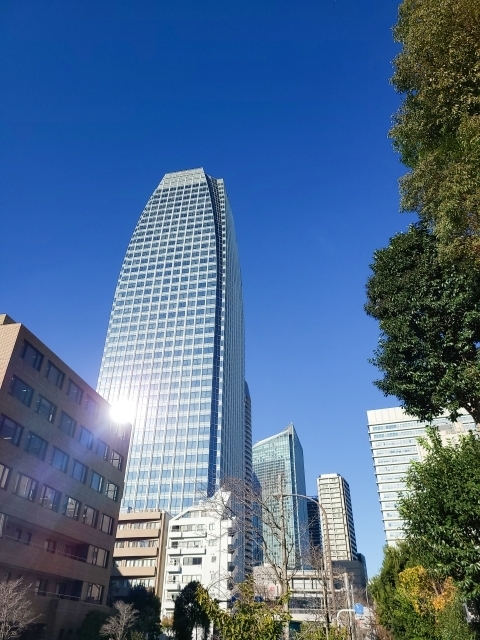
34F Atago Green Hills MORI Tower 2-5-1 Atago, Minato-ku, Tokyo 105-6234, Japan
電話: Tel 81+(0)50-3649-6002