20 Years of Litigation Experience | Licensed in Japan & California | Fellow of IAFL | Member of BHBA (Family Law & Trusts & Estates Sections)

Cross-Border Estate & Family Law Japan
Legal Profession Corporation CastGlobalToikyo Office 34F Atago Green Hills MORI Tower2-5-1 Atago, Minato-ku,
Tokyo、105-6234, Japan
Office Hours
9:30~17:30
on weekdays
050-3649-6002

Introduction
It is increasingly common for U.S. citizens to own real estate in Japan, whether as an investment, a family asset, or a property retained from a period of residence. In high-net-worth families, such assets often form a meaningful part of a globally diversified estate.
However, when a U.S. citizen who owns Japanese real estate passes away, heirs frequently encounter a complex intersection of legal systems. The inheritance of Japanese real estate is not governed solely by U.S. law, nor is it administered through a unified court process. Instead, it requires careful navigation of both foreign succession law and Japanese procedural requirements.
Many families are surprised to learn that, regardless of where the heirs reside, the transfer of title to Japanese real estate must comply with Japanese registration procedures. Without proper coordination, this process may result in delays, administrative burdens, or unintended co-ownership structures.
This article provides a structured, solution-oriented explanation of how Japanese real estate is handled when a U.S. citizen dies, with particular focus on legal clarity, procedural requirements, and practical considerations for overseas heirs.
1. Governing Law and Its Practical Implications
One of the central issues in cross-border inheritance is determining the governing law of succession.
Under the Japanese conflict of laws rule, inheritance is generally governed by the law of the deceased person’s nationality at the time of death. Accordingly, where the deceased was a U.S. citizen, U.S. law (typically state law) may determine the identity of heirs and their respective shares.
However, this does not eliminate the role of Japanese law. Even where U.S. law governs the substantive aspects of inheritance, the transfer of ownership of Japanese real estate must be completed in accordance with Japanese procedural law.
In practical terms, this means that registration with the Japanese Legal Affairs Bureau is required to effectuate the transfer of title. Without this registration, the heir cannot be recognized as the legal owner under Japanese law.
This dual framework—foreign substantive law and Japanese procedural law—often requires coordinated legal analysis across jurisdictions.
2. Identifying the Heirs
Before any transfer of ownership can take place, the heirs must be properly identified.
Japanese authorities and registration procedures typically require documentation confirming:
- The death of the property owner
- The identity of each heir
- The legal relationship between the deceased and the heirs
Where heirs reside outside Japan, these documents are often issued by foreign authorities and must be accompanied by accurate Japanese translations.
Depending on the circumstances, additional documents—such as notarized statements or affidavits—may also be required to establish heirship under applicable law.
Failure to properly identify all heirs may prevent registration or lead to disputes in later stages.
3. Registration of Title (Inheritance Registration)
Ownership of Japanese real estate is recorded in the property registry maintained by the Legal Affairs Bureau.
Following inheritance, heirs must complete a procedure known as inheritance registration to update the registered ownership.
This process generally requires:
- Documents establishing inheritance rights
- Identification documents of the heirs
- Registration application forms
- Certified Japanese translations of foreign-language documents
Only after the completion of this registration does the heir become the legally recognized owner of the property under Japanese law.
Because registration is a formal legal requirement, even minor inconsistencies in documentation may result in delays or rejection.
4. Multiple Heirs and Co-Ownership Issues
In many cases, multiple heirs are involved.
Under Japanese law, when several heirs inherit real estate, they may initially acquire the property as co-owners. This co-ownership structure can create practical complications, particularly where heirs reside in different countries or have differing intentions regarding the property.
If the heirs wish to transfer ownership to a specific individual or divide the property, they must reach an agreement on the division of the estate.
Cross-border cases often add complexity, including:
- Differences in legal expectations
- Communication challenges
- Variations in tax implications
Careful coordination at this stage is essential to avoid prolonged co-ownership or disputes.
5. Practical Challenges for Overseas Heirs
Overseas heirs frequently encounter practical challenges during the inheritance process, including:
- Obtaining documents from multiple jurisdictions
- Preparing accurate Japanese translations
- Completing notarization procedures abroad
- Coordinating procedures remotely with Japanese authorities
Because the registration of real estate must ultimately be completed in Japan, many heirs find it beneficial to work with professionals familiar with Japanese procedures.
Effective coordination can significantly reduce administrative burdens and processing time.
6. Estate Planning Considerations
For U.S. citizens who own Japanese real estate, advance estate planning can play a critical role in simplifying future inheritance procedures.
Potential planning strategies include:
- Preparing a will that appropriately addresses Japanese assets
- Coordinating estate planning between U.S. and Japanese legal systems
- Maintaining clear and accessible records of property ownership
Thoughtful planning can reduce uncertainty, streamline procedures, and minimize the risk of disputes among heirs.
Conclusion
When a U.S. citizen who owns real estate in Japan passes away, the inheritance process requires both an understanding of foreign succession law and strict compliance with Japanese procedural requirements.
By carefully addressing:
- Governing law
- Identification of heirs
- Registration requirements
- Co-ownership considerations
- Cross-border practical challenges
heirs can significantly improve the efficiency and predictability of the process.
In complex or high-net-worth cases, early coordination with professionals experienced in Japanese inheritance and real estate registration is often the most effective way to ensure a smooth and legally compliant outcome.
Contact information

Please contact via e-mail.
050-3649-6002
Office hours 9:30~17:30 on weekdays
Contact us

Strategies for
International Divorce
More information
Representation in
Hague Convention
Cases
More information
Contact information
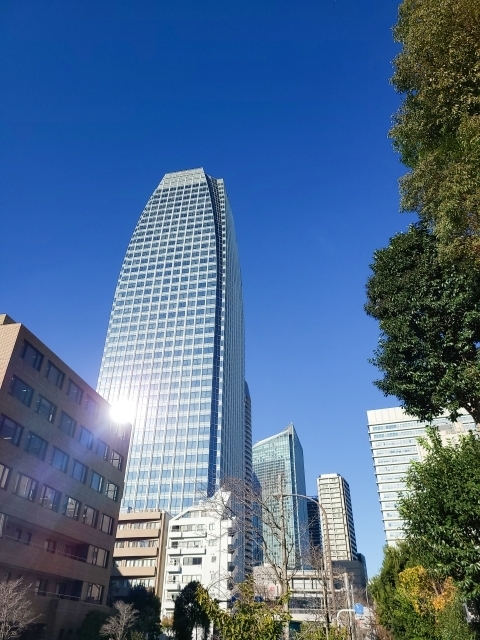
34F Atago Green Hills MORI Tower 2-5-1 Atago, Minato-ku, Tokyo 105-6234, Japan
電話: Tel 81+(0)50-3649-6002