20 Years of Litigation Experience | Licensed in Japan & California | Fellow of IAFL | Member of BHBA (Family Law & Trusts & Estates Sections)

Cross-Border Estate & Family Law Japan
Legal Profession Corporation CastGlobalToikyo Office 34F Atago Green Hills MORI Tower2-5-1 Atago, Minato-ku,
Tokyo、105-6234, Japan
Office Hours
9:30~17:30
on weekdays
050-3649-6002

Introduction
As global mobility continues to increase, it is no longer unusual for foreign residents to hold assets in Japan or to have family members residing there. For internationally mobile families and high-net-worth individuals, these cross-border connections often result in estates that span multiple legal systems.
When a death occurs, foreign residents are frequently surprised to discover that inheritance procedures in Japan differ significantly from those in common law jurisdictions such as the United States. Japan does not operate a centralized probate court system. Instead, estate administration is primarily conducted through documentation, coordination among heirs, and asset-specific procedures, with court involvement only in certain cases.
This structural difference can create uncertainty, particularly where foreign law and Japanese procedural requirements intersect. However, with a clear understanding of the framework and early coordination with appropriate professionals, Japanese inheritance procedures can be managed efficiently.
This article provides a practical and structured overview of Japanese inheritance procedures, highlighting key legal principles, procedural steps, and common issues faced by foreign residents.
1. Absence of a Centralized Probate System
In many common law jurisdictions, probate is a court-supervised process involving the appointment of an executor or personal representative.
Japan takes a fundamentally different approach.
In most cases, inheritance procedures proceed without court supervision if the heirs can reach agreement. The heirs execute a written document known as an “Agreement on Division of Estate” (Isan Bunkatsu Kyogisho), which specifies how assets are to be distributed.
Financial institutions and government authorities typically rely on this agreement when processing asset transfers.
However, if the heirs are unable to reach agreement, the matter may proceed to mediation or adjudication before the Japanese Family Court.
2. Identification of Legal Heirs
Before any distribution of assets can take place, all legal heirs must be identified.
Under Japanese law, heirs are determined according to statutory inheritance rules. The general order of succession is as follows:
- Spouse (always an heir)
- Children (or, if a child has predeceased the decedent, that child’s lineal descendants)
- Parents (if there are no lineal descendants)
- Siblings (if there are no lineal ascendants)
In cross-border situations, determining heirs may require analysis under both Japanese law and applicable foreign law, depending on conflict-of-law rules.
In practice, Japanese authorities require documentation establishing family relationships. This often includes:
- Family registry records (koseki)
- Birth certificates
- Marriage certificates
- Death certificates
Where foreign nationals are involved, notarized translations and legalized documents are typically required.
3. Handling Japanese Assets
Foreign residents often encounter procedural complexities when dealing with Japanese assets.
Real Estate
Transfer of real estate generally requires:
- An estate division agreement
- Documentation identifying heirs
- Registration with the Legal Affairs Bureau
Bank Accounts
Japanese banks typically freeze accounts upon notification of death. To release funds, banks require:
- Estate division agreement
- Identification of all heirs
- Official documentation of family relationships
Securities and Investments
Japanese brokerage accounts follow similar procedures and may require additional compliance documentation.
Each category of asset involves distinct procedural requirements, making coordination essential.
4. Role of the Japanese Family Court
Although many inheritance matters are resolved without court involvement, the Family Court plays an important role in certain situations, including:
- Disputes among heirs
- Appointment of guardians for minors
- Appointment of an estate administrator where heirs are unclear
- Renunciation of inheritance
Foreign residents should be particularly aware that inheritance renunciation must be filed with the Family Court within three months from the time the heir becomes aware of the death.
Failure to comply with this deadline may result in the loss of the right to renounce.
5. Japanese Inheritance Tax Considerations
Japan imposes inheritance tax based on factors such as the location of assets and the residency status of the deceased and heirs.
Inheritance tax may apply to:
- Real estate located in Japan
- Assets situated in Japan
- In certain cases, worldwide assets
Tax rates can reach up to 55%, making early tax planning a critical consideration, particularly for high-net-worth individuals.
Foreign heirs may also face potential double taxation if their home country imposes estate or inheritance tax.
6. Practical Challenges in Cross-Border Inheritance
Foreign residents frequently encounter practical difficulties when dealing with Japanese inheritance procedures, including:
- Language barriers in official documentation
- Differences between civil law and common law systems
- Obtaining documents across multiple jurisdictions
- Coordinating legal professionals in different countries
These challenges can significantly affect both timing and cost.
As a result, cross-border inheritance cases often benefit from coordinated support involving Japanese legal professionals and advisors in the relevant foreign jurisdictions.
Conclusion
Inheritance procedures in Japan differ fundamentally from those in common law jurisdictions. For foreign residents, understanding Japan’s documentation-based system, statutory heirship rules, and tax implications is essential.
By addressing:
- The structure of Japanese inheritance procedures
- Identification of heirs
- Asset-specific requirements
- Court involvement where necessary
- Tax implications
foreign residents can approach inheritance matters with greater clarity and reduced risk.
In complex or high-net-worth cases, early coordination among professionals familiar with both Japanese and foreign legal systems is often the most effective way to ensure a smooth and compliant outcome.
Contact information

Please contact via e-mail.
050-3649-6002
Office hours 9:30~17:30 on weekdays
Contact us

Strategies for
International Divorce
More information
Representation in
Hague Convention
Cases
More information
Contact information
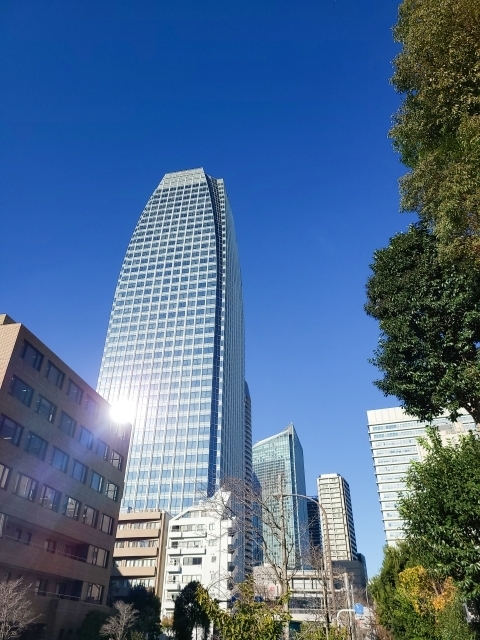
34F Atago Green Hills MORI Tower 2-5-1 Atago, Minato-ku, Tokyo 105-6234, Japan
電話: Tel 81+(0)50-3649-6002