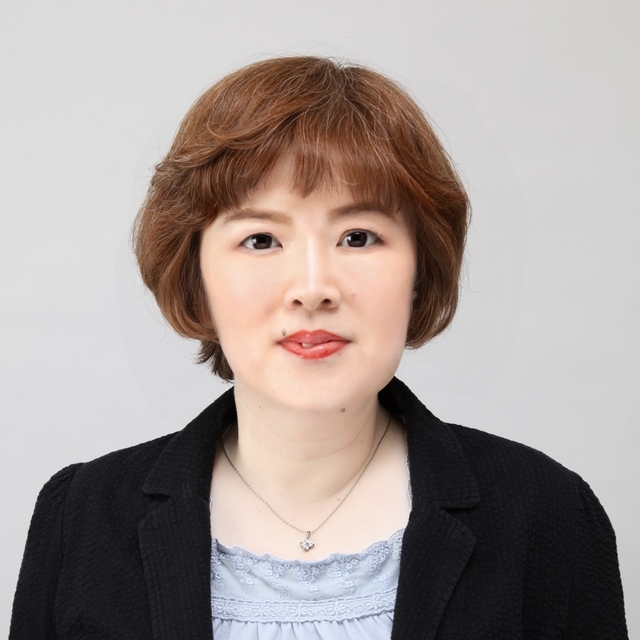
20 Years of Litigation Experience | Licensed in Japan & California | Fellow of IAFL | Member of BHBA (Family Law & Trusts & Estates Sections)

Cross-Border Estate & Family Law Japan
Legal Profession Corporation CastGlobalToikyo Office 34F Atago Green Hills MORI Tower2-5-1 Atago, Minato-ku,
Tokyo、105-6234, Japan
Office Hours
9:30~17:30
on weekdays
050-3649-6002
Introduction
In practice, cross-border divorce cases involving Japan often become stalled at an early stage. For example, parties may face difficulties in obtaining information about bank accounts in Japan or even identifying where assets are located. These issues frequently arise because Japan does not provide broad discovery procedures comparable to those available in California. As a result, cases that appear straightforward in theory may become complex in practice. This article explains how these issues arise and what can be considered under Japanese law.
1. Basic Framework: Property Division in Japan
Under Japanese law, property division upon divorce is governed by Article 768 of the Civil Code. A spouse may request a distribution of property, and if the parties cannot agree, the Family Court determines the method and amount of distribution.
In practice, assets acquired during the marriage are generally subject to division, while assets obtained by inheritance or gift are excluded.
Although Japan does not adopt a strict community property system like California, courts often arrive at an approximate 50/50 division. However, Japanese courts retain discretion and may adjust the outcome based on contributions, income differences, and other circumstances.
Accordingly, assumptions based solely on California law may not fully reflect how a case will be handled in Japan.
2. Ownership vs. Substantive Contribution
In practice, one of the most commonly misunderstood aspects of Japanese property division is that legal title does not necessarily determine ownership.
Even if a bank account or real estate is registered in the name of one spouse, it may still be subject to division if it was formed through joint efforts during the marriage.
For individuals accustomed to systems where title is decisive, this can be unexpected. Japanese courts focus on the substantive economic contribution to the acquisition and maintenance of assets.
At the same time, California law also does not rely solely on title. Under the community property system, the key issue is whether the asset was acquired during the marriage.
Therefore, Japan and California share a common basic concept: assets acquired during marriage are treated as jointly owned marital property.
However, the practical handling of assets depends on each jurisdiction. For assets located in Japan, it is necessary to consider how Japanese law is applied in practice.
In particular, when the realization or recovery of assets is involved, Japanese procedural and evidentiary rules may play a critical role.
Accordingly, where Japanese assets are involved, understanding how Japanese law operates in practice—potentially through consultation with a lawyer familiar with Japanese property division—may be an important step.
3. Evidence Collection and Asset Identification
The most significant practical difficulty arises in evidence collection.
In California, discovery procedures allow broad access to financial information. In contrast, Japan does not provide an equivalent system.
In practice, identifying the existence or location of assets can itself be difficult. If a specific bank is known, it may be possible to obtain information through a court investigation order. However, if the location of assets is unknown, there is no comprehensive mechanism to conduct a broad search.
As a result, cases involving undisclosed or unclear assets often require more time and careful planning in Japan.
4. Enforcement of Foreign Judgments
In cross-border cases, parties may assume that a California judgment resolves the matter. However, in practice, this is not always the case.
Foreign judgments may be recognized in Japan only if they satisfy certain requirements under the Code of Civil Procedure.
Moreover, judgments directly affecting real estate located in Japan are not enforceable. Separate proceedings in Japan are required.
Therefore, even after obtaining a judgment in California, additional steps may be necessary in Japan.
5. Practical Considerations
In practice, cross-border divorce cases involving Japan require early and coordinated planning.
Asset identification, evidence strategy, and enforcement should be considered together. Applying California-based assumptions without adjustment may lead to delays.
Understanding these limitations is often essential before deciding how to proceed in practice. If uncertainty exists regarding Japanese bank accounts, real estate, or enforcement, it may be helpful to clarify available options at an early stage.
Conclusion
Japan and California share a common basic principle in property division: assets acquired during the marriage are generally treated as marital property.
However, the practical handling of property division differs across jurisdictions.
Accordingly, where assets are located in Japan, including issues relating to recovery, it may be important to consider how Japanese law is applied in practice.
From this perspective, consulting a lawyer in Japan may be beneficial when dealing with property located in Japan.
Contact information

Please contact via e-mail.
050-3649-6002
Office hours 9:30~17:30 on weekdays
Contact us

Strategies for
International Divorce
More information
Representation in
Hague Convention
Cases
More information
Contact information
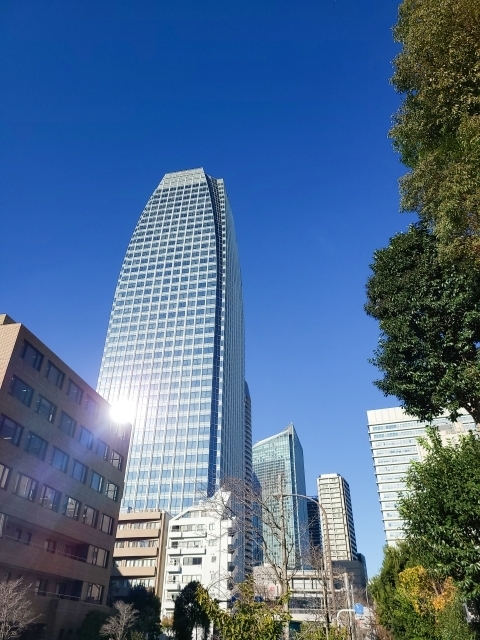
34F Atago Green Hills MORI Tower 2-5-1 Atago, Minato-ku, Tokyo 105-6234, Japan
電話: Tel 81+(0)50-3649-6002